Neurodivergence in the Classroom
Thursday 22nd January, 2026 1:30-3:30pm (2 hours PD)
Presenter: Tatiana Arellano, Occupational Therapist & Director of Skills for Learning
Tatiana’s Business: Skills for Learning:
http://skillsforlearning.com.au/index.html
A little about Tatiana from her website:
“Tatiana qualified as an Occupational Therapist in 2000 from the University of South Australia. She has since worked interstate and internationally to develop her knowledge and expertise in a wide range of clinical and academic areas of practice”.
“Tatiana has a strong commitment to providing evidence based, current and relevant therapeutic services to families and key stakeholders within their natural environment. Tatiana has a strong emphasis on empowering her clients to identify their own learning needs and assist them to create individualised learning objectives. Tatiana uses relevant, realistic strategies based on current child development theory and practice, and uses standardised assessments and outcome measures to identify relevant goals and impact of intervention”.
Personal Note:
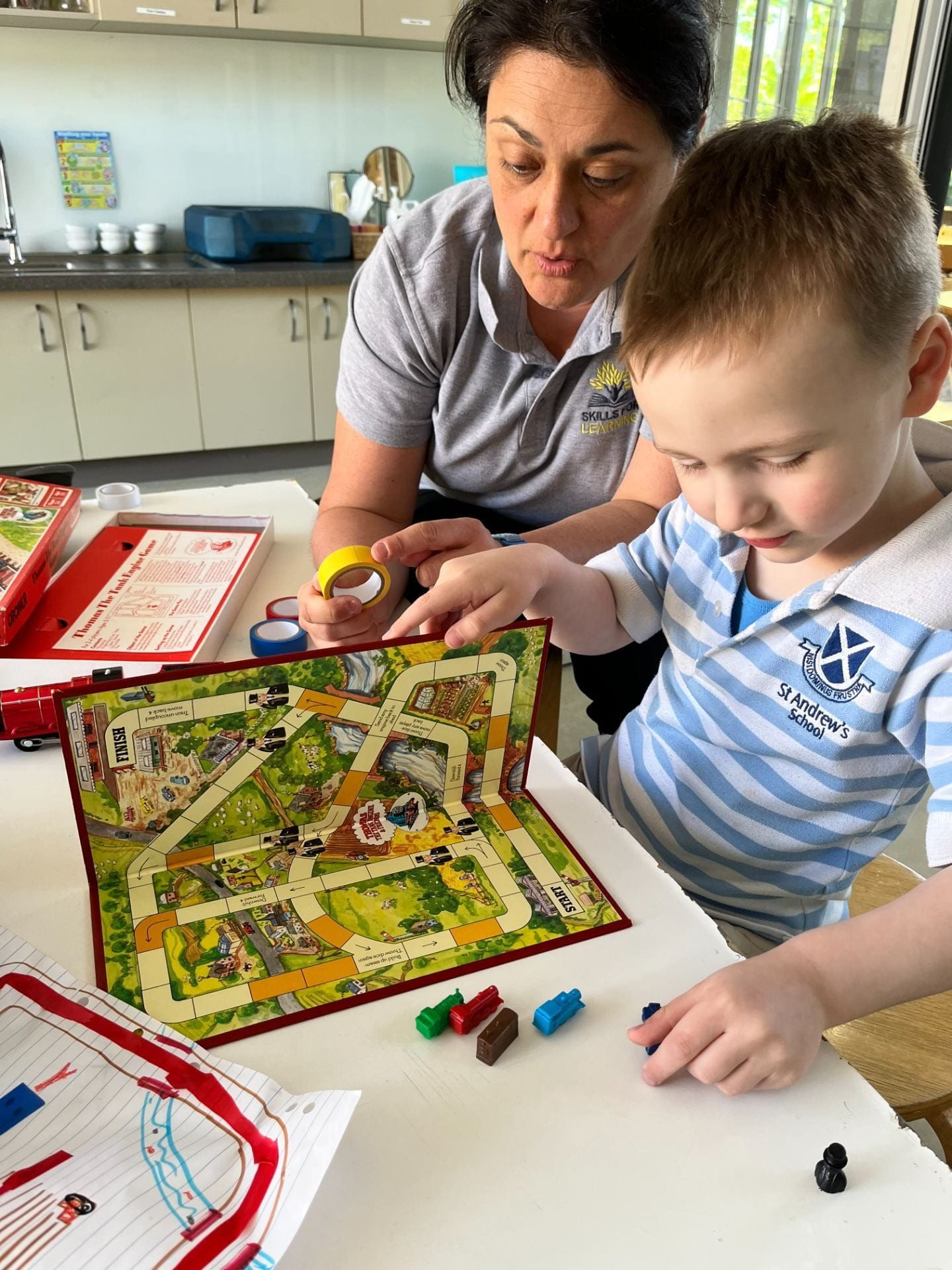
I met Tatiana in 2020, when my son Edison was three and attending the ELC at St Andrew’s School. It was at this time that our family began the journey toward his diagnosis and early intervention. Tatiana’s knowledge, guidance, and compassionate approach were invaluable. She supported us through every step — from navigating the NDIS process and interpreting reports to collaborating with teachers and developing his PPL plans.
Tatiana has an exceptional ability to connect with children. Edison adores her. She understands how he thinks, supports him through challenges, and celebrates his successes with genuine care. She consistently reminds us of the progress he has made and approaches her work with both professionalism and heart. I trust her implicitly with my most precious responsibility — my child — and she continues to have a profound impact on our lives, for which I am deeply grateful.
With this in mind, you can imagine my delight in learning that Tatiana would be presenting to staff during our professional development day at St Andrew’s School. While much of the content was familiar to me through our ongoing conversations, the session allowed us to explore these ideas in greater depth. It was a thoroughly engaging and valuable experience.
 PD Notes:
Learning Goals:
- To develop an understanding of the basis of occupational performance
- To use PEO (Person, Environment, Occupation) model of human occupation to explore child development and behaviour
- To understand the neuroscience of brain development
- To understand regulation and behaviour through a sensory lens
- To develop an understanding of the importance of sensory modulation in child development and the impact on regulation
- To understand executive function skills and their development
- To apply new knowledge to explore teaching and learning practices
PEO (Person, Environment, Occupation) model
- Person: the learner
- Environment: the classroom, the places we learn and engage
- Occupation: the tasks, work to be undertaken
Occupation Performance Domains: refer to the areas of daily life in which individuals engage, participate, and find meaning. These typically include self-care, work or school, leisure, social participation, and play, highlighting how people function and thrive in everyday activities.

Central Nervous System: (CNS), made up of the brain and spinal cord, controls how the body processes information, responds to the environment, and regulates movement, emotions, and bodily functions.
What is Sensory Processing? Sensory processing is the way the brain receives, organises, and responds to information from our senses. This includes sight, sound, touch, movement, balance, and body awareness. It underpins all learning, behaviour, and daily functioning, influencing how we attend, move, regulate emotions, and interact with the world. When sensory processing is well supported, individuals are better able to engage, learn, and thrive.


What are Meltdowns:
Meltdowns are intense, involuntary responses to sensory, emotional, or cognitive overload. They occur when a person’s nervous system becomes overwhelmed and can no longer cope with the demands being placed on it. Meltdowns are not behavioural choices or acts of defiance, but a sign that support, regulation, or recovery is needed.
When a meltdown occurs, children often need up to 45 minutes — or longer — to fully regulate before they are ready to communicate or re-engage. During this time, attempts to talk through or resolve the issue are unlikely to be effective and may escalate the situation. The priority should be safety, calm, and de-escalation. Meaningful discussion and problem-solving are best revisited once the child has had sufficient time to recover — this may be later that day or even the following day — as returning to the issue too soon can re-trigger the meltdown.
For autistic individuals, regulation is best supported through co-regulation and intentional regulation strategies, as the nervous system often relies on external support, predictability, and connection to feel safe and organised.
How can we support neurotypical students to participate and engage in lessons at school?
Neurotypical students engage best when learning environments are predictable and well organised, with clear systems, consistent routines, and strong, trusting relationships. When perceived risk is low and the focus is on process rather than results, students feel safe to participate, take learning risks, and remain engaged.
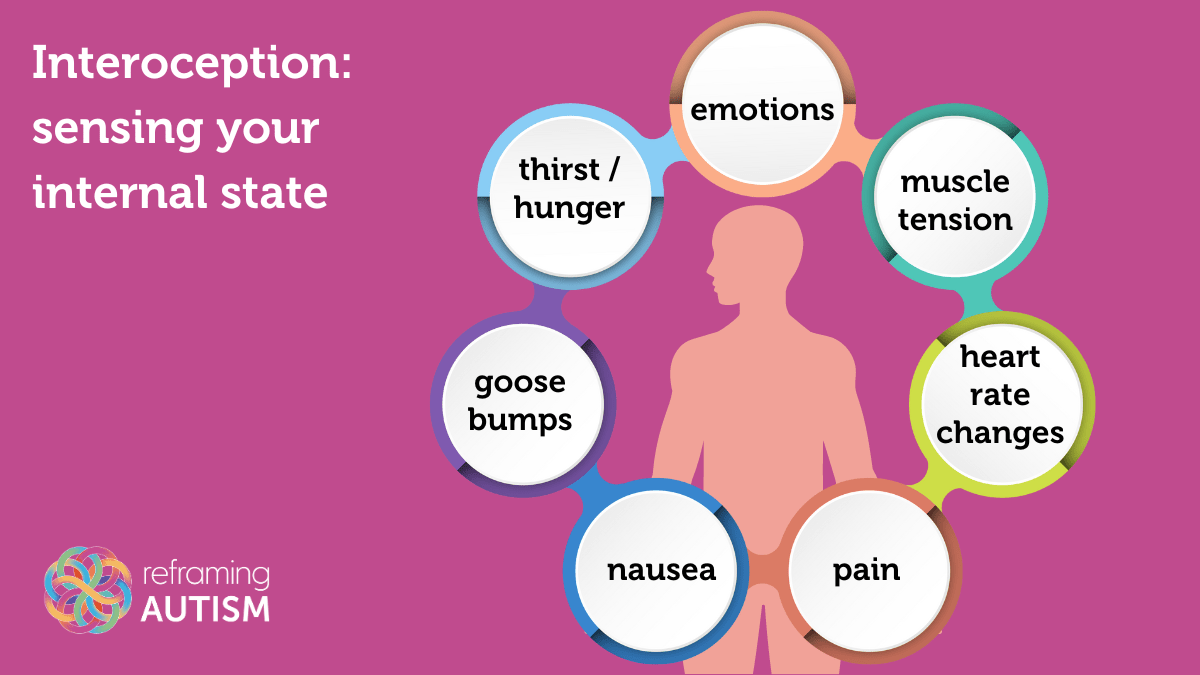
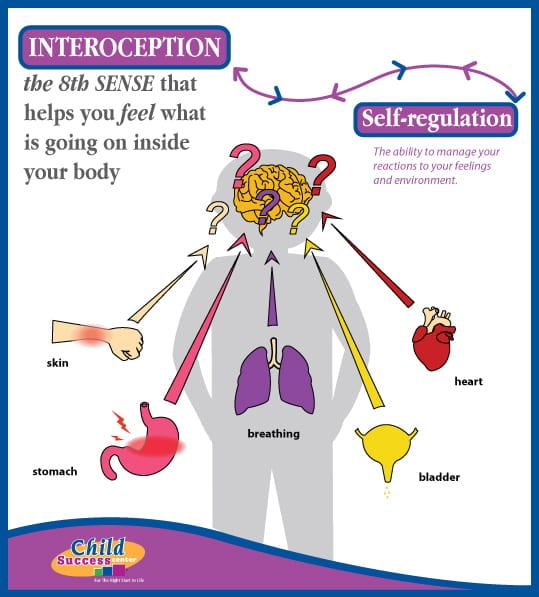
8 Senses: making meaning out of this world:
https://www.sensoryfriendly.net/you-have-eight-senses-not-five/

Neurodivergent brains often seek dopamine to support motivation, focus, and regulation. When these needs are unmet, individuals may seek stimulation through movement, sensory input, or intense interests. Behaviour is not random or defiant — it is a response to a stimulus and a form of communication, signalling an underlying need that requires understanding and support.
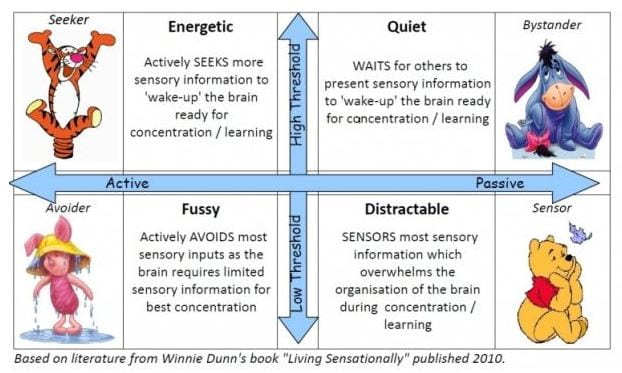
Sensory Profiles: Sensory profiles describe an individual’s unique sensory preferences, sensitivities, and thresholds across different sensory systems. They help explain how a person experiences and responds to sensory input, guiding the supports and strategies needed for regulation, engagement, and learning.

“Living Sensationally” is an approach to understanding and supporting how individuals experience the world through their senses. It recognises that everyone processes sensory information differently and encourages strategies that help people engage, learn, and thrive in ways that align with their sensory needs. The focus is on creating environments, routines, and supports that respect these differences, promoting well-being, participation, and positive experiences. I loved how we reflected on our students and who we would identify as a Tigger (Seeker), Piglet (Avoider) etc.
Window of Tolerance: The Window of Tolerance is the optimal zone where a person can effectively manage emotions, think clearly, and engage with the world. Outside this zone, stress or overwhelm can lead to hyperarousal (anxiety, agitation) or hypoarousal (shut down, withdrawal), making regulation and learning difficult.

What is a neurodivergent brain? A neurodivergent brain processes, perceives, and responds to information differently from the neurotypical brain. It includes conditions such as autism, ADHD, dyslexia, dysgraphia, dyscalculia and others, reflecting natural variations in thinking, learning, and sensory experiences.

Autism and ADHD Shared Characteristics: Autism and ADHD can share traits such as difficulty with attention, emotional regulation, sensory sensitivities, and social challenges. These traits can sometimes resemble responses seen in trauma, such as heightened alertness, avoidance, or emotional outbursts. The key difference is that for neurodivergent individuals, these traits reflect how their brains are wired, rather than a reaction to past experiences. Understanding this distinction helps tailor support and reduce misunderstanding.

These notes were just a few of the key take-aways for me from today’s session with Tatiana.
I hope these resources are useful for you also. It is my hope that our schools and members of the community continue to learn, seek answers and adapt strategies to assist neurodiverse people. As we learnt earlier today during Mark Le Messurier’s presentation about the double empathy problem, we understand that communication difficulties between autistic and non-autistic people go both ways. It’s not just the autistic person who struggles to understand others — non-autistic people may also struggle to understand autistic perspectives. This highlights that misunderstandings are mutual, not one-sided. We need to work together to develop understanding, empathy, respect and find ways to better understand each other.
It has been a wonderful day of learning for me. A lot of the content obviously hit home on a personal level due to my family dynamics, but professionally, I have always been passionate about inclusive education and meeting the needs of individuals in my classroom. I’m pleased to see that schools are continuing to provide opportunities for staff to learn and engage with content that will support best practice for the benefit of our students, staff and families.

 He works in private practice as a mentor to children and adolescents, and as a coach to parents”.